Energy Efficient Auto Roll Filters for GPU Cooling Systems in Australia: A Practical Upgrade for AI Data Centers and Mining-Grade Infrastructure
Australia is rapidly expanding its digital infrastructure, from metro-edge AI facilities to remote industrial campuses that rely on high-density GPU computing. As GPU servers push higher thermal loads, air handling and filtration become a core performance factor―not an optional accessory. Dust intrusion, airborne salts, and fine particulate contamination can reduce coil efficiency, clog heat exchangers, increase fan power draw, and trigger unplanned maintenance windows.
That is why more operators are searching for energy efficient auto roll filters for GPU cooling systems―a filtration approach that prioritizes stable airflow, lower pressure drop, and minimal manual intervention in harsh environments.
Why GPU Cooling Efficiency Depends on the Filter Strategy
Modern GPU clusters generate concentrated heat and require consistent airflow across CRAC/CRAH units, in-row cooling, or indirect evaporative cooling systems. In Australian conditions, filtration is often challenged by:
-
Red dust events and fine mineral particulates (common near mining belts, inland logistics routes, and unpaved service roads)
-
High ambient temperature cycles that amplify HVAC load
-
Salt-laden coastal air in cities and ports, accelerating corrosion risks on coils and electronics
-
Variable air quality near construction zones or industrial precincts
When filters load quickly, static pressure rises. This increases fan energy, reduces airflow, and can cause thermal throttling in GPU rooms. Energy waste here is not theoretical―it converts directly into extra power draw and reduced compute reliability.
What Is an Automatic Roll Air Filter (Auto Roll Filter)?
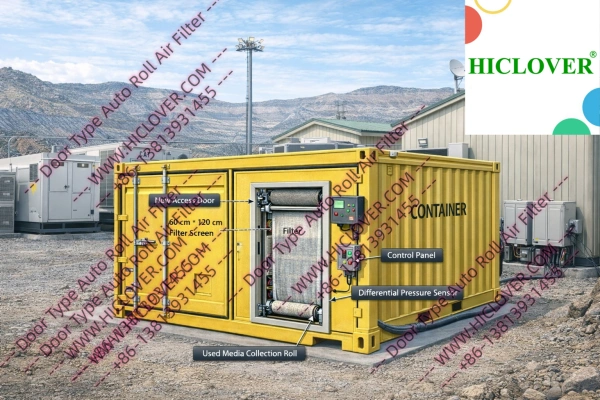
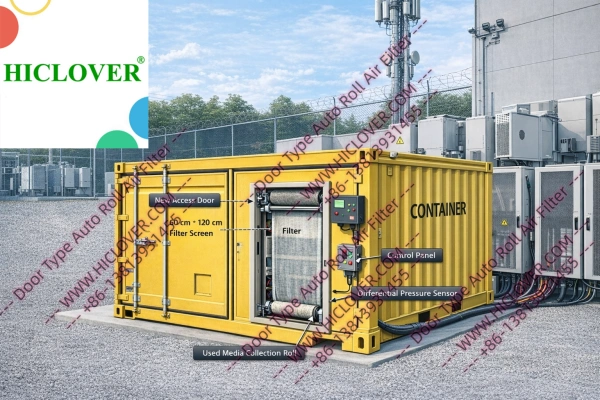
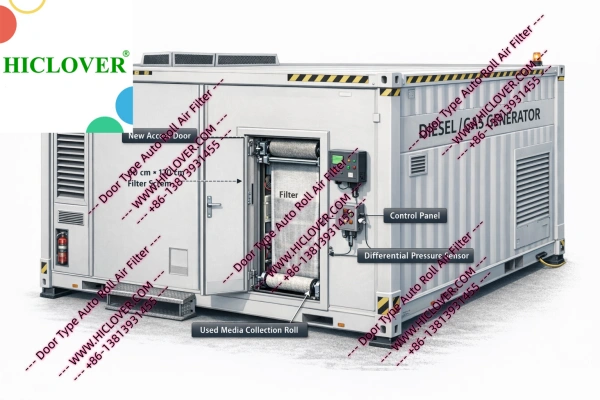
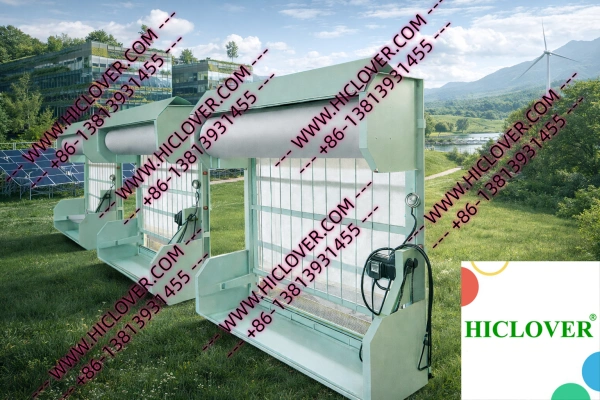
An Automatic Roll Air Filter is a self-renewing filtration system that advances clean filter media automatically as the loaded section becomes clogged. Instead of replacing fixed panels frequently, the system feeds new media forward, maintaining stable airflow and helping HVAC systems operate close to their design curve.
For Australian data centers and mining-adjacent GPU rooms, the value is simple:
-
Reduced manual filter change frequency
-
More stable differential pressure (ΔP) control
-
Better uptime for cooling systems under dust-heavy conditions
-
Lower lifecycle cost when access is difficult or staffing is limited
PLC Automation: The Key to Hands-Off Maintenance
HICLOVER’s automatic roll filter systems can be equipped with PLC-based control, enabling:
-
Differential pressure sensor feedback (ΔP-based roll advancing)
-
Scheduled advancing logic (time-based + safety override)
-
Alarm outputs for BMS / EMS integration
-
Roll usage tracking and replacement reminders
-
Interlock logic for fan operation and airflow conditions
This automation reduces the need for constant onsite inspection―especially useful for remote Australian projects where technicians cannot service HVAC rooms weekly.
Energy Efficiency: The Hidden Cost of Pressure Drop
Many filtration upgrades focus only on dust removal, but energy efficiency is often determined by pressure loss. For GPU cooling systems, the goal is:
-
Maintain airflow stability
-
Prevent excessive fan power increase
-
Protect coils and heat exchange surfaces
-
Reduce airflow turbulence at the intake section
A properly designed auto roll filter setup helps control pressure rise by advancing media before airflow is compromised. Over long operating cycles, this can reduce energy spikes associated with clogged filters and stabilize cooling performance during peak compute loads.
Australia-Specific Use Cases: Data Centers Beyond City Limits
Australia’s growth in AI infrastructure is not limited to Sydney and Melbourne. Several realistic project categories are accelerating demand for rugged filtration:
1) Mining and Resources GPU Computing
Mining operations increasingly deploy GPU compute for:
-
Geology modeling and seismic interpretation
-
Real-time fleet optimization
-
AI video analytics and safety monitoring
-
Autonomous drilling and haulage support
These environments are dust-intense, and HVAC systems often run continuously in switch rooms, modular compute shelters, and hybrid containerized server units.
2) Remote or Containerized Infrastructure
When compute rooms are deployed near industrial corridors, filtration must cope with:
-
Limited maintenance staff
-
Harsh air quality
-
Continuous uptime requirements
-
High HVAC load due to ambient heat
Auto roll filters provide a “set-and-run” airflow protection layer that aligns with remote operations.
3) Construction-Adjacent Data Halls
Australian infrastructure expansions create temporary high-dust zones. In such cases, filters load rapidly and manual replacement becomes a recurring operational disruption.
Technical Keywords That Matter in Search and Specifications
When evaluating filtration for GPU cooling systems, Australian EPC contractors and operators often search or specify terms such as:
-
differential pressure controlled filter media advancing
-
low initial resistance filtration media
-
G4 pre-filtration for HVAC intake protection
-
high-dust loading capacity filter roll media
-
BMS dry contact alarm integration
-
coil fouling prevention for CRAH units
-
MERV-equivalent particulate capture performance
-
remote maintenance filtration for modular data centers
-
mining HVAC dust control for electronics rooms
-
ASHRAE intake filtration strategy
These terms may look niche, but they are frequently used in real purchasing discussions―especially when the project is tied to energy consumption and uptime performance.
Recommended Filtration Architecture for GPU Cooling Rooms
A common practical approach is staged filtration:
Stage 1 (Pre-filter): Auto roll filtration
-
Captures bulk dust and airborne solids
-
Keeps intake airflow stable
-
Extends service intervals in high particulate regions
Stage 2 (Secondary filtration): Optional higher-grade filter bank (as project requires)
-
Supports finer particulate control
-
Helps protect sensitive coils and heat exchange surfaces
This staged structure can be adapted for CRAC/CRAH intake, AHU sections, and containerized cooling skids.
A Simple Way to Validate ROI in Australia
For Australian operators, the economic logic is typically built on:
-
Reduced site visits for filter replacement
-
Lower unplanned downtime from cooling performance drop
-
Stabilized fan energy consumption
-
Improved protection for cooling coils and downstream equipment
In many mining-adjacent or remote deployments, service logistics cost more than the filter media itself, so automation becomes an efficiency tool, not a luxury feature.
Visit this search link for more industry references:
https://www.google.com/search?q=energy+efficient+auto+roll+filters+for+GPU+cooling+systems
Why HICLOVER Automatic Roll Filters Fit Australian Operations
HICLOVER automatic roll air filter solutions are designed to support demanding air environments while keeping maintenance simple:
-
PLC automation option for low-touch operation
-
Continuous media renewal helps keep airflow stable
-
Suitable for high-dust zones like mining and inland industrial sites
-
Practical for modular data centers and containerized cooling systems
-
Supports reliable HVAC performance for high-density GPU computing
To learn more about automatic roll filter configurations for industrial and data center HVAC applications, you can also review product information at www.cloverfilter.com.
Contact (HICLOVER / CloverFilter)
Mobile (WhatsApp): +86-13813931455
Website: www.cloverfilter.com
Email: [email protected]
2026-01-14/09:17:56