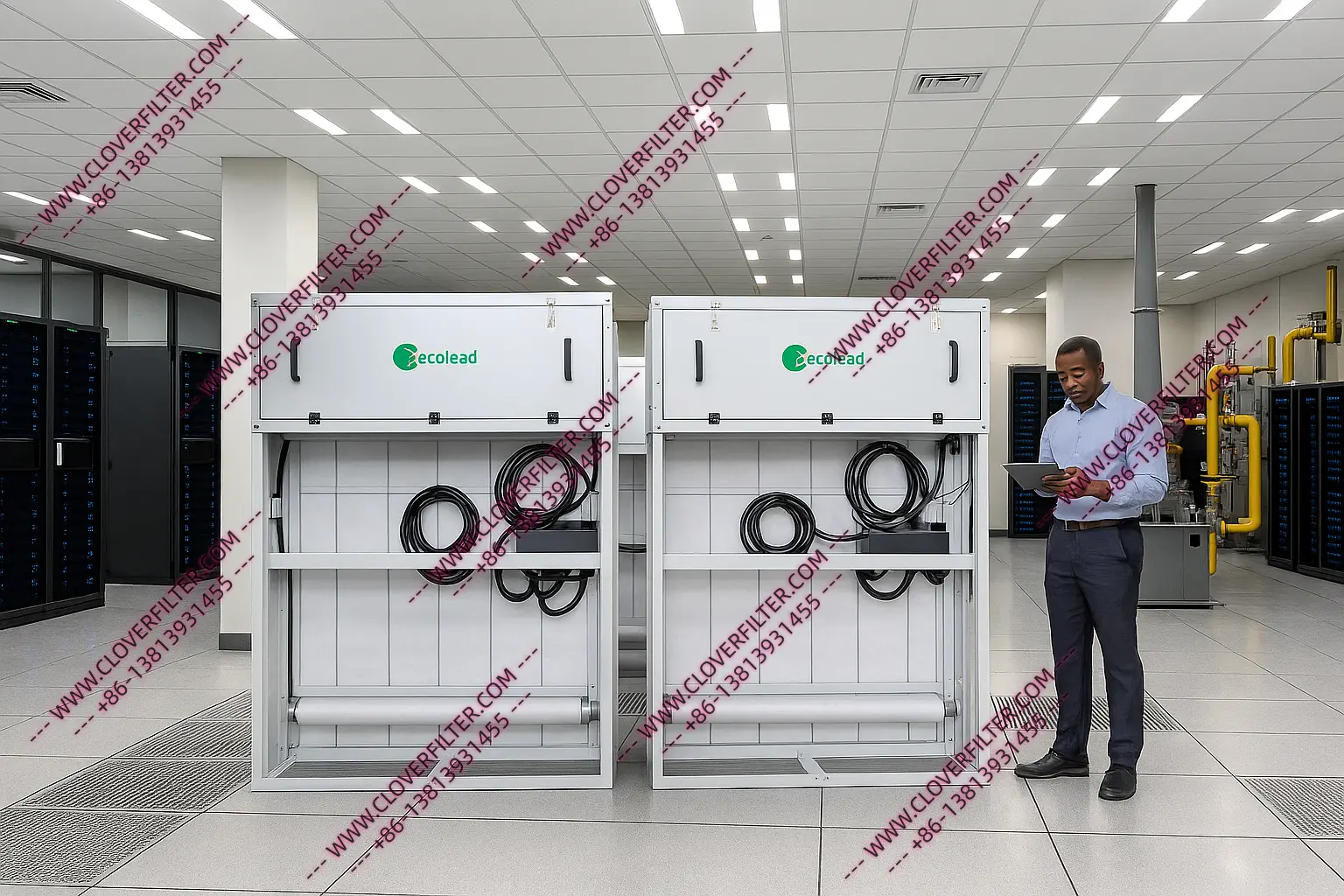
Automatic Roll Air Filter for AI Data Centers in Australia: A Low-Maintenance Filtration Upgrade for High-Dust Sites
Australia’s AI infrastructure is accelerating. As more hyperscale and edge data centers come online to support GPU clusters, AI model training, and real-time inference workloads, operators are facing an old but growing problem: air quality consistency.
In practice, Australian data center projects often sit near logistics corridors, expanding industrial zones, coastal salt-air environments, and dust-prone regions―and many are indirectly linked to the country’s mining and resources economy. Even when a data center is built in a controlled urban area, upstream risks still exist: dry seasonal winds, construction dust, fine particulates, and airflow instability caused by high ventilation turnover.
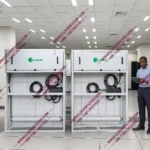
For facility engineers who want stable intake air, reduced filter change labor, and predictable pressure drop behavior, a HICLOVER Automatic Roll Air Filter can be a practical solution―especially for sites that operate 24/7 and cannot afford frequent shutdown windows.
This article focuses on the core keyword: automatic roll air filter for AI data centers, with a clear engineering angle for Australia.
Why Australian AI Data Centers Need Smarter Air Filtration
AI racks and GPU cabinets generate extreme thermal loads. To keep inlet temperatures stable, modern data centers increasingly depend on high-volume air movement and efficient heat rejection systems. In that reality, air filtration becomes a reliability component, not just a comfort feature.
Typical Australian site challenges include:
-
Fine dust ingress (construction activity, industrial neighbors, wind-driven particulates)
-
High ambient particulate spikes during dry seasons
-
Salt-laden air in coastal zones (risk of corrosion and conductive contamination)
-
Intake pressure instability from rapid fan speed changes and load shifting
-
Maintenance workforce limitations in remote locations
Traditional panel filters can work, but frequent replacement creates two headaches: labor cost and airflow fluctuation from filter loading.
That’s exactly where an automatic roll-type system changes the operating model.
What Is an Automatic Roll Air Filter, and Why Does It Fit AI Workloads?
A roll-type filter system uses a continuous filter media roll. Instead of replacing a clogged panel filter manually, the system automatically advances clean media based on:
-
differential pressure (ΔP) thresholds
-
time schedules
-
PLC logic triggers
-
remote maintenance strategy (optional)
The idea is simple: keep pressure drop stable while reducing human intervention.
For AI data centers, the benefit is not only “clean air.” The bigger benefit is predictable airflow performance and reduced risk of unexpected filter blockage events that can disturb cooling balance.
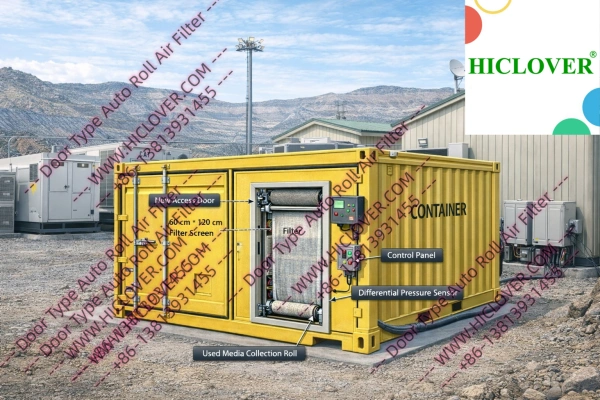
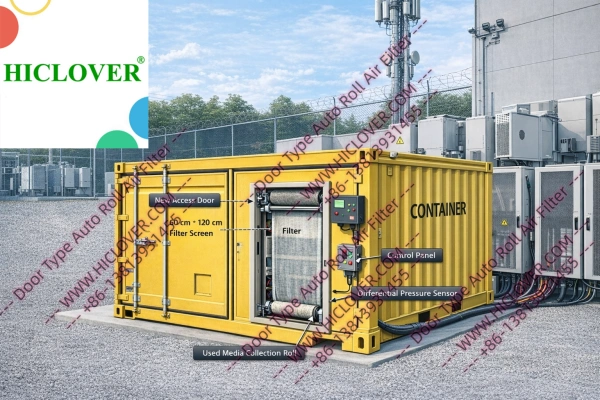
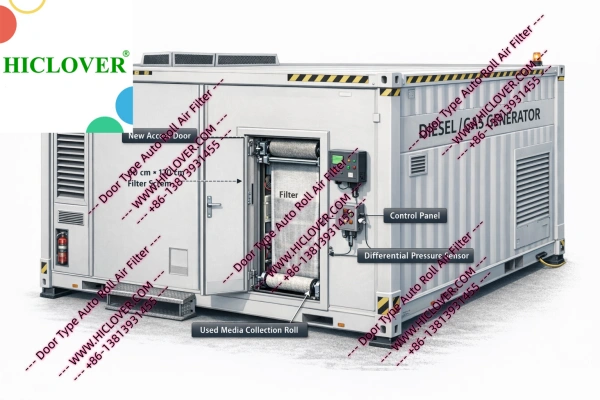
You can also insert this solution into containerized or modular infrastructure―ideal for rapid deployment projects.
PLC Automation: Less Manual Filter Change, More Stable Operations
A major reason Australian operators adopt automation is straightforward: keeping maintenance labor low while improving consistency.
HICLOVER’s PLC-enabled automatic roll air filter system supports:
-
automatic media indexing based on ΔP
-
adjustable step length and feed frequency
-
alarm logic for roll-end detection
-
interlock with fan systems (optional)
-
service-friendly access design for quick inspection
For data centers, this is especially valuable in high uptime environments, where maintenance windows are limited and risk tolerance is low.
Instead of guessing when filters are too dirty, you maintain stable airflow resistance and keep filtration performance under control.
“Cold but Searchable” Technical Keywords That Matter in Australia
If you are sourcing filtration for AI data centers or hybrid industrial environments, the following terms appear less frequently but are still actively searched by engineers and project buyers:
-
differential pressure controlled filter media indexing
-
PLC-driven filter roll advancement
-
continuous media air pre-filtration module
-
intake air particulate surge buffering
-
constant pressure drop filtration strategy
-
G4 / MERV prefiltration for HVAC intakes
-
dust loading stabilization in high airflow systems
-
remote site maintenance reduction filtration
-
filter media consumption rate optimization
-
low-touch filtration for 24/7 facilities
These are the kinds of technical search phrases that align with real operational needs, especially in Australian environments where dust behavior is often seasonal and site-dependent.
Data Centers + Mining: Why the Same Filtration Problem Keeps Repeating
Australia’s mining and resources sector drives large-scale infrastructure growth―power distribution, telecom expansion, logistics upgrades―and increasingly, regional data processing needs.
In mining regions, filtration problems are amplified:
-
heavy airborne dust from haul roads
-
particulate peaks during blasting or excavation
-
high wind events pushing dust into intake zones
-
long-distance support teams and limited onsite technicians
This is why roll-type filtration has long been considered in mining HVAC and industrial ventilation. Today, the same logic is being applied to AI-supporting facilities, including:
-
edge data centers near remote industrial zones
-
containerized modular data rooms
-
equipment shelters for comms + compute
-
hybrid facilities supporting automation, AI monitoring, and industrial analytics
In these mixed environments, automatic roll filtration acts as a front-line prefilter, improving downstream component protection and reducing the frequency of maintenance tasks.
Suggested Installation Points in AI Data Center Airflow Architecture
For many Australian projects, the most practical approach is using the automatic roll air filter as pre-filtration at high-dust entry points, such as:
-
fresh air intake louvers
-
AHU intake sections
-
containerized equipment intake walls
-
ventilation corridors feeding electrical rooms
-
cooling plant intake zones (site-dependent)
A well-designed pre-filtration stage helps reduce dust load on finer downstream filters, improving lifecycle economics and keeping pressure drop more stable.
Selecting the Right Roll Media and Control Logic
Roll systems work best when specified correctly. Selection usually depends on:
-
dust concentration profile (seasonal, site activity)
-
airflow volume and face velocity
-
acceptable pressure drop range
-
target maintenance interval
-
automation preference (ΔP-based, time-based, or hybrid)
In high-dust conditions, a ΔP-driven indexing method is often preferred because it adapts to real loading rather than fixed assumptions.
For many AI data center applications, the goal is not “ultra-fine filtration at the first stage.” The goal is stabilizing airflow and reducing dust mass ingress so that deeper filtration stages remain consistent and easier to manage.
Here is the required search engine link inserted naturally for buyers researching the keyword:
https://www.google.com/search?q=automatic+roll+air+filter+for+AI+data+centers
Why HICLOVER for Australian Projects
For Australia-facing buyers, the value proposition is practical:
-
supports high-dust and variable particulate environments
-
PLC automation reduces manual filter handling
-
stable pressure drop behavior helps keep cooling airflow predictable
-
fits modular and containerized infrastructure concepts
-
suitable for industrial sites, mining-adjacent projects, and AI infrastructure expansion
If your project is an AI data center, an edge compute module, or an industrial hybrid facility, an automatic roll air filter can be one of the simplest upgrades to reduce long-term maintenance and improve operational stability.
Contact (HICLOVER)
Mobile (WhatsApp): +86-13813931455
Website: www.cloverfilter.com
Email: [email protected]
2026-01-13/21:42:04